


22 September 2026: Original Paper
Determinants of Lack of Consent for Deceased Organ Donation Among Nurses and Physicians: A Cross-Sectional Study
Paulina Kurleto  ABCDEFG 1*, Lucyna Tomaszek ACDEF 1,2, Irena Milaniak CDE 1
DOI: 10.12659/AOT.953598
Ann Transplant 2026; 31:e953598


Abstract
BACKGROUND: Deceased organ donation is the principal source of transplantable organs; however, organ shortages remain a major public health challenge. Healthcare professionals play a pivotal role in shaping societal attitudes toward transplantation. This study aimed to identify sociodemographic, psychological, and attitudinal factors independently associated with lack of willingness to consent to deceased organ donation among nurses and physicians working in dialysis units.
MATERIAL AND METHODS: A nationwide cross-sectional survey was conducted in Poland between February 2023 and June 2024 among 850 nurses and 243 physicians. Data were collected using paper-based and online questionnaires, incorporating sociodemographic variables, donation-related attitudes, and validated psychometric scales assessing life satisfaction, self-esteem, self-efficacy, and empathy. The primary outcome was lack of willingness to consent to deceased organ donation. Group comparisons were performed using Mann-Whitney U and chi-square tests. Multivariable logistic regression identified independent determinants.
RESULTS: Overall, 35.2% of participants either declined or did not clearly express willingness to consent to deceased organ donation. Higher levels of personal distress were associated with increased odds of lack of willingness to consent (B = 0.05; OR = 1.05; 95% CI, 1.00-1.10; P = 0.04), whereas higher empathic concern was associated with decreased odds (B = −0.06; OR = 0.94; 95% CI, 0.89-0.98; P = 0.01). Belief in the safety of blood donation was linked to lower odds of lack of willingness to consent (B = −0.28; OR = 0.76; 95% CI, 0.63-0.91; P < 0.001). The strongest association was observed for acceptance of organ donation from a deceased close family member (B = −2.36; OR = 0.09; 95% CI, 0.07-0.13; P < 0.001). Donation-related beliefs demonstrated stronger associations with consent attitudes than sociodemographic characteristics.
CONCLUSIONS: Unwillingness to consent to deceased organ donation among dialysis staff was associated with empathy dimensions and donation-related beliefs.
Keywords: Transplantation, Attitude of Health Personnel, Organ Transplantation
Introduction
Organ transplantation remains the most effective treatment for end-stage organ failure, offering substantial survival benefits and improved quality of life compared with alternative therapeutic options [1–3]. Deceased organ donation constitutes the primary source of transplantable organs worldwide and therefore represents a cornerstone of contemporary transplantation systems [3,4]. Despite substantial progress in transplant medicine, including advances in surgical techniques, immunosuppressive therapy, and donor management, the shortage of organs available for transplantation remains one of the most critical global public health challenges [4,5].
The effectiveness of organ donation and transplantation systems depends not only on legal frameworks and healthcare infrastructure but also on public trust and societal acceptance of deceased organ donation [6]. Consent for deceased organ donation is influenced by multiple factors, including cultural and religious beliefs, ethical concerns, knowledge about transplantation, and attitudes toward death and the human body. Because decisions regarding organ donation are often made in emotionally difficult circumstances, healthcare professionals play a particularly important role in the donation process. Physicians and nurses are frequently involved in identifying potential donors, communicating with patients’ families, providing information about donation procedures, and supporting decision-making [7]. Their personal attitudes toward organ donation may therefore influence both clinical practice and broader public perceptions of transplantation.
Previous studies conducted in different countries indicate that healthcare professionals generally demonstrate more favorable attitudes toward organ donation than does the general population; however, a substantial proportion still refuses consent for deceased organ donation or remains undecided [8,9]. Importantly, these attitudes differ across professional groups and healthcare settings and may also vary according to cultural, religious, and social contexts [10]. Understanding the reasons underlying lack of consent among healthcare professionals is therefore essential, as reluctance toward donation within this group may negatively affect communication with families, confidence in the donation process, and ultimately organ donation rates.
Research suggests that attitudes toward deceased organ donation among healthcare professionals are shaped by multiple interacting factors. These include sociodemographic and professional characteristics, transplant-related knowledge, previous clinical experience, and beliefs regarding the safety and effectiveness of transplantation procedures [11]. Studies also highlight that lack of experience and training affect staff confidence levels in facilitating donation [12]. In addition, positive attitudes toward organ donation are strongly associated with belief in the value and effectiveness of transplantation. Given their professional role and direct contact with patients and families, healthcare professionals may transfer their own beliefs and attitudes to relatives involved in donation decisions [13]. In recent years, increasing attention has been given to psychological determinants of organ donation attitudes, including empathy, emotional responses to death and suffering, and the ability to adopt the perspectives of others [14–16].
Dialysis unit staff constitute a distinctive professional group within the transplantation system. These healthcare professionals provide long-term care to patients with advanced organ failure and remain in continuous contact with transplantation-related issues. Their clinical experience, close therapeutic relationships with patients, and regular exposure to the consequences of organ shortages may shape unique attitudes toward deceased organ donation. Nevertheless, the determinants of lack of consent for deceased organ donation within this professional group remain insufficiently explored [17,18].
The issue is particularly relevant in the context of the current situation in Polish transplantation medicine. According to national organ donation statistics published by Poltransplant, the year 2025 marked a record high for transplantation activity in Poland. A total of 781 deceased organ donors were recorded, corresponding to 20.8 per million population, representing the highest donation rate in the country’s history. These donors enabled 2254 organ transplant procedures from deceased donors, reflecting a substantial increase compared with previous years [19].
Despite this progress, Poland continues to report lower deceased donation rates than many Western European countries and remains below the European leaders in organ donation activity [5,20]. Therefore, identifying factors that may limit willingness to consent to deceased organ donation, including those present among healthcare professionals, remains an important public health priority.
Given the central role of healthcare professionals in the organ donation process and the limited evidence regarding dialysis unit staff, a better understanding of the determinants of lack of consent for deceased organ donation in this group is needed. Therefore, the aim of this study was to identify sociodemographic, psychological, and attitudinal factors independently associated with lack of consent for deceased organ donation among nurses and physicians working in dialysis units.
Material and Methods
STUDY DESIGN AND SETTING:
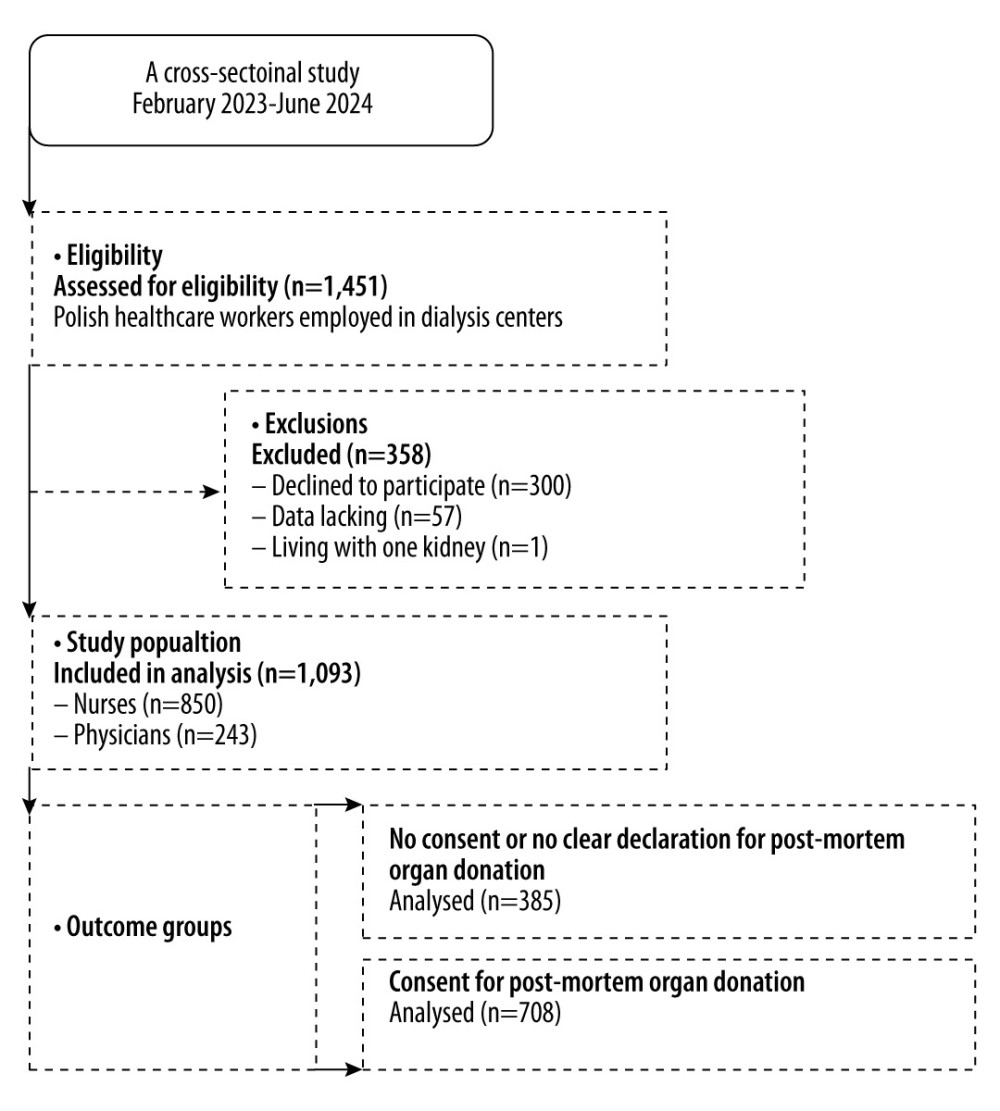
A nationwide cross-sectional study was conducted between February 2023 and June 2024 following approval from the Bioethics Committee of the Andrzej Frycz Modrzewski Cracow University (approval No. KBKA/3/O/2023). The study population consisted of 1093 healthcare professionals—physicians and nurses—employed in both the public and private dialysis centers throughout Poland.
The study protocol complied with the ethical principles of the Declaration of Helsinki (World Medical Association, 2013), adhered to the STROBE (Strengthening the Reporting of Observational Studies in Epidemiology) reporting guidelines [21], and was conducted in accordance with the General Data Protection Regulation (GDPR) requirements [22]. The study was prospectively registered at ClinicalTrials.gov (identifier: NCT05797337). All participants provided informed consent prior to participation (Figure 1).
PARTICIPANTS:
We conducted a nationwide cross-sectional survey among physicians and nurses working in dialysis centers throughout Poland. Participation was voluntary, and eligibility required adequate command of the Polish language to complete the questionnaire. Before data collection, participants were fully informed about the study aims and procedures. Incomplete questionnaires were excluded from the analysis.
INSTRUMENTS:
To maximize nationwide coverage and reduce sampling bias, data collection was conducted simultaneously using paper-based and online questionnaires. Questionnaires were distributed across dialysis centers located in different regions of Poland. Respondents were further encouraged to inform colleagues about the study, which helped increase recruitment reach. A total of 1451 healthcare professionals received invitations to participate in the study through direct questionnaire distribution in dialysis centers and online dissemination. Of these, 1093 complete questionnaires were included in the final analysis, corresponding to a response rate of 75.3% among individuals who received study invitations directly from the investigators or participating centers.
The self-administered questionnaire consisted of several thematic sections. The initial part captured sociodemographic and professional characteristics. Subsequent sections explored prior experiences with blood donation, attitudes toward the donation of cells, tissues, and organs, and beliefs concerning the safety and benefits of transplantation procedures. Additionally, standardized psychometric instruments were used to evaluate selected psychological traits of the respondents.
Life satisfaction was measured using the Polish adaptation of the Satisfaction with Life Scale [23,24]. This instrument includes 5 statements rated on a 7-point Likert scale ranging from “strongly disagree” to “strongly agree.” Aggregate scores range from 5 to 35, with higher values reflecting greater life satisfaction. The Polish version demonstrates good psychometric reliability (Cronbach’s α = 0.86).
Self-esteem was assessed with the Polish adaptation of the Rosenberg Self-Esteem Scale [25,26]. The scale includes 10 items evaluating global self-worth through positively and negatively phrased statements. Responses are scored on a 4-point Likert scale, yielding total scores between 0 and 30, where higher scores indicate higher self-esteem. The Polish validation shows good internal consistency (Cronbach’s α = 0.81–0.83).
General self-efficacy was evaluated using the Generalized Self-Efficacy Scale developed by Schwarzer and Jerusalem and adapted for Polish populations by Juczyński [23]. The tool contains 10 items forming a unidimensional structure. Total scores range from 10 to 40, with higher scores indicating stronger perceived self-efficacy. The Polish version demonstrates satisfactory reliability (Cronbach’s α = 0.85).
Empathy was measured using the Polish version of the Interpersonal Reactivity Index [27]. The instrument consists of 28 items grouped into 4 subscales: perspective taking, empathic concern, personal distress, and fantasy. Items are rated on a 5-point Likert scale from 0 (“does not describe me well”) to 4 (“describes me very well”). Higher subscale scores (range: 0–28) reflect greater intensity of the respective empathy dimension.
OUTCOMES:
The primary outcome of the study was lack of willingness to consent to deceased organ donation, defined as either explicit refusal or absence of an unequivocal declaration of consent.
Secondary outcomes included sociodemographic, psychological, and attitudinal factors examined in relation to consent for deceased organ donation.
STATISTICAL ANALYSIS:
Statistical analyses were performed using Statistica software (version 13.3; TIBCO Software Inc, StatSoft Poland, Cracow) and Set Plus (StatSoft Polska Sp. z o.o., version 5.1.0, 2024). Continuous variables were assessed for normality of distribution using the Shapiro-Wilk test. As most continuous variables did not follow a normal distribution, they are presented as medians with lower (Q1) and upper quartiles (Q3). Categorical variables are reported as absolute numbers and percentages.
Comparisons between groups defined by consent for deceased organ donation were conducted using the Mann-Whitney U test for continuous variables and the chi-square test for categorical variables. A 2-tailed
To identify factors independently associated with lack of consent for deceased organ donation, multivariable logistic regression analysis was performed. The dependent variable was lack of consent for deceased organ donation (coded as 1), while consent was coded as 0. Independent variables included sociodemographic, professional, psychological, and attitudinal factors that were significant in univariable analyses or considered clinically relevant. All variables showing associations with the outcome at
Results
SOCIODEMOGRAPHIC AND PROFESSIONAL CHARACTERISTICS:
As shown in Table 1, respondents without consent for deceased organ donation were older (median age [IQR], 52 [47–56] vs 50 [39–55] years; P < 0.0001) and had longer job seniority (20 [12–27] vs 18 [5–26] years; P = 0.0002). Negative attitudes were more frequent among nurses than physicians (P < 0.0001), women (P = 0.02), and participants with children (82.3% vs 76.3%; P = 0.02). Lack of completed specialization training was also associated with negative attitudes (59.0% vs 52.3%; P = 0.03).
No significant associations were observed with marital status (
PERSONAL PSYCHOLOGICAL CHARACTERISTICS:
As presented in Table 2, respondents without consent for deceased organ donation reported lower life satisfaction (median [IQR], 23 [20–26] vs 24 [20–27]; P = 0.01) and lower self-esteem (20 [18–22] vs 20 [18–23.5]; P = 0.001). In terms of empathy, lower perspective taking (17 [14–19] vs 17 [15–20]; P = 0.001) and empathic concern (16 [14–19] vs 17 [15–21]; P = 0.0002), as well as higher personal distress (14 [12–17] vs 14 [11–16]; P = 0.003), were observed among respondents without consent. No difference was found for the fantasy dimension (P = 1.00) and perceived self-efficacy between groups (P = 0.07).
DONATION-RELATED ATTITUDES IN TRANSPLANTATION:
As shown in Table 3, respondents without consent for deceased organ donation were less likely to have donated blood at least once in their lifetime (16.9% vs 28.5%; P = 0.00002) and less frequently believed that blood donation is safe (40.9% vs 67.4%; P < 0.0001). Registration as a bone marrow donor (10.6% vs 23.6%; P < 0.0001) and belief in the safety of bone marrow transplantation (35.1% vs 51.5%; P < 0.0001) were also less common in the non-consenting group.
Similarly, respondents without consent were less likely to believe that kidney transplantation improves quality of life (74.0% vs 88.7%;
Acceptance of organ donation from a deceased close family member (3.2% vs 79.4%;
FACTORS ASSOCIATED WITH LACK OF CONSENT FOR DECEASED ORGAN DONATION:
In the multivariable logistic regression model (see Table 4), variables with a positive regression coefficient (B > 0) were associated with increased odds of lack of consent for deceased organ donation, whereas variables with a negative coefficient (B < 0) were associated with decreased odds of lack of consent. Higher levels of personal distress were associated with increased odds of lack of consent (B = 0.05; OR = 1.05 per 1-point increase, 95% CI, 1.00–1.10; P = 0.04), whereas higher empathic concern was associated with lower odds (B = −0.06; OR = 0.94 per 1-point increase, 95% CI, 0.89–0.98; P = 0.01). Among attitudinal variables, belief that blood donation is safe was associated with decreased odds of lack of consent for deceased organ donation (B = −0.28; OR = 0.76, 95% CI, 0.63–0.91; P < 0.001). The strongest association was observed for acceptance of organ donation from a deceased close family member, which was associated with a markedly lower likelihood of lack of consent (B = −2.36; OR = 0.09, 95% CI, 0.07–0.13; P < 0.001).
The model demonstrated excellent fit (Hosmer-Lemeshow χ2 = 2.93,
Discussion
IMPLICATION FOR CLINICAL PRACTICE:
The present findings suggest that attitudes toward deceased organ donation among healthcare professionals may be associated not only with transplantation-related knowledge, but also with empathy-related characteristics, emotional responses, trust, and personal beliefs. Therefore, educational and supportive initiatives aimed at healthcare professionals working in dialysis settings may benefit from combining factual knowledge about transplantation with elements addressing communication, emotional coping, and ethical reflection.
Because empathic concern was associated with greater willingness to consent to deceased organ donation, future research may further explore whether approaches focused on perspective-taking and compassionate engagement are related to more favorable donation attitudes. Potential educational approaches could include communication skills workshops using simulated donor-family conversations, narrative medicine or patient-story formats illustrating transplant outcomes, and interdisciplinary ethics seminars focused on ethical and relational aspects of organ donation.
Recognizing the potential role of psychological and emotional factors in shaping donation-related attitudes may help healthcare organizations better understand factors associated with willingness to consent to deceased organ donation among healthcare professionals.
STRENGTHS AND LIMITATIONS:
The study’s strengths lie in its large sample size and the use of standardized instruments. Several limitations should be acknowledged. First, the cross-sectional design does not allow for causal inference. Second, the study relied on self-reported data from healthcare professionals, which may introduce response bias or social desirability bias. Third, not all components of attitudes toward organ donation were analyzed, particularly the cognitive component and sociodemographic factors, including religiosity [30]. Fourth, not all potential determinants of attitudes toward organ donation were examined, such as religiosity and cultural factors. Finally, because the study was conducted among nurses and physicians working in dialysis units, the findings may not be fully generalizable to other healthcare professionals or to the general population.
Overall, the present study indicates that selected psychological characteristics and donation-related attitudes are associated with lack of consent for deceased organ donation among nurses and physicians working in dialysis units. These findings may contribute to a better understanding of factors related to organ donation attitudes in healthcare professionals and may support future research aimed at identifying potentially modifiable determinants of donation-related decisions.
Conclusions
Lack of consent for organ donation among dialysis unit staff was independently associated with selected psychological characteristics and donation-related attitudes. Higher personal distress was associated with greater likelihood of negative attitudes, whereas empathic concern, belief in the safety of donation procedures, and acceptance of donation within the family were associated with greater willingness to consent.
The findings suggest that attitudes toward deceased organ donation among healthcare professionals may be associated not only with professional experience, but also with selected emotional and attitudinal factors. However, due to the cross-sectional nature of the study, no causal relationships can be established.
Data Availability Statement
The authors will make the raw data on which the conclusions in this article are based available without undue reservation upon request.
Tables
Table 1. Sociodemographic and professional characteristics of physicians and nurses working in dialysis units according to consent for deceased organ donation.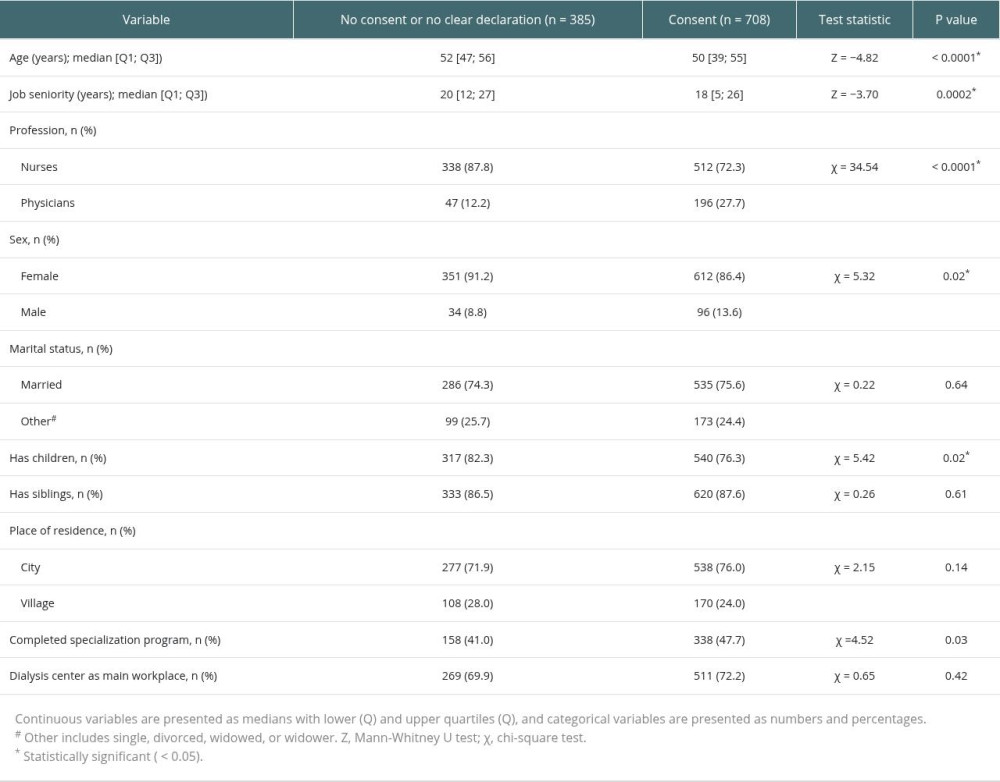 Table 2. Psychological characteristics of physicians and nurses working in dialysis units according to consent for deceased organ donation.
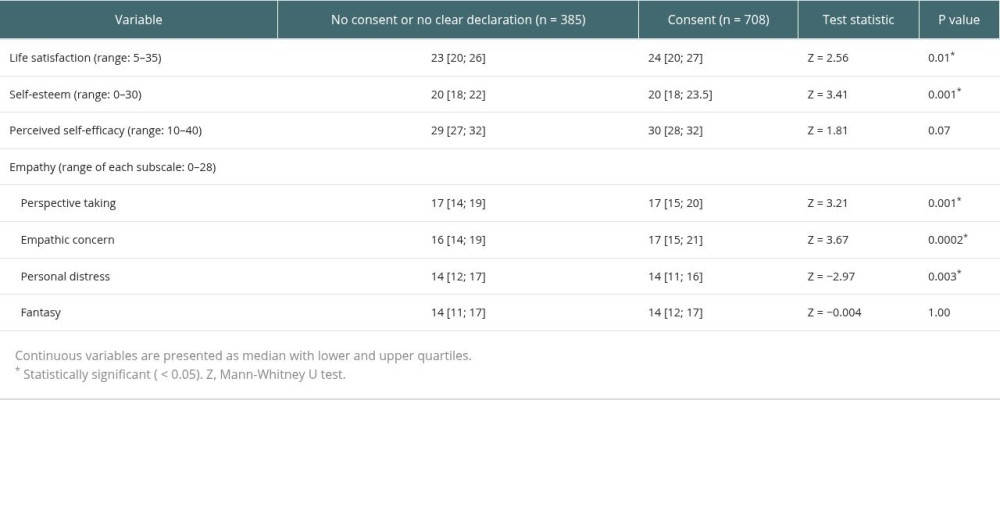 Table 3. Association of attitudes toward transplantation of cells, tissues, and organs of physicians and nurses working in dialysis units according to consent for deceased organ donation.
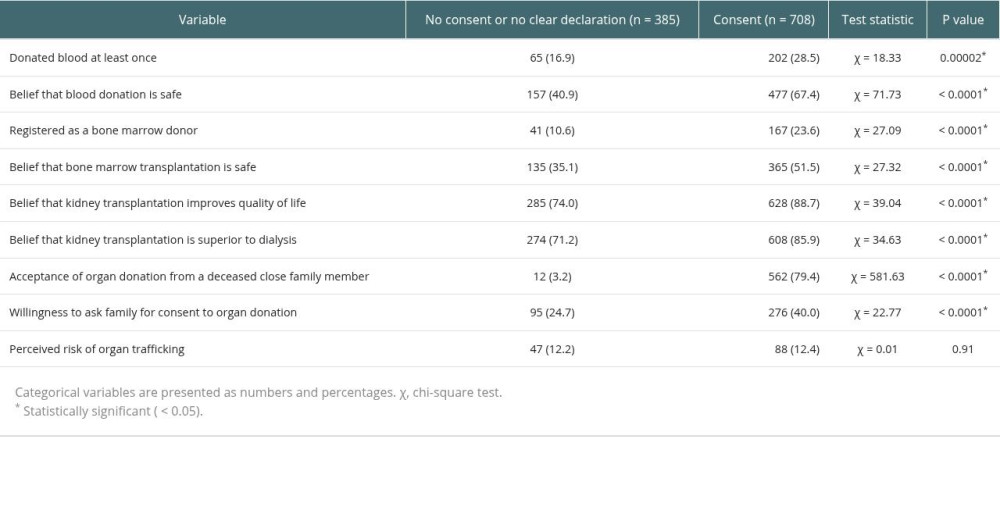 Table 4. Sociodemographic, psychological, and attitudinal factors associated with lack of consent for deceased organ donation.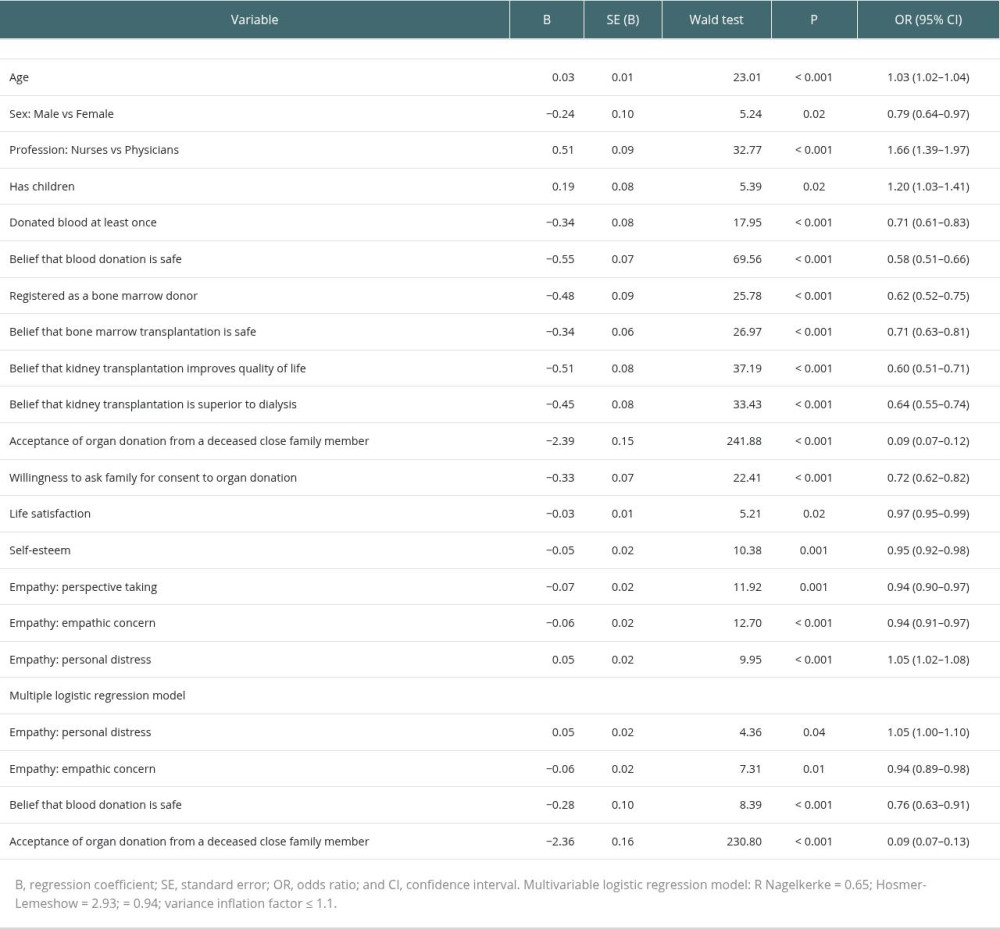
References
1. Rana A, Gruessner A, Agopian VG, Survival benefit of solid-organ transplant in the United States: JAMA Surg, 2015; 150(3); 252-59
2. Ying T, Shi B, Kelly PJ, Death after solid organ transplantation: A population-based cohort study: Am J Transplant, 2020; 20(9); 2551-63
3. Global Observatory on Donation and Transplantation: International report on organ donation and transplantation activities 2023, 2024, Madrid, WHO-ONT
4. World Health Organization Organización Nacional de Trasplantes: Global Observatory on Donation and Transplantation (GODT): Global data on organ donation and transplantation [Internet], 2024, Geneva, World Health Organization [cited 2026 Mar 2]. Available from: https://www.transplant-observatory.org
5. European Directorate for the Quality of Medicines & HealthCare (EDQM): International figures on donation and transplantation 2024, 2025, Strasbourg, Council of Europe
6. Hvidt NC, Mayr B, Paal P, The role of healthcare professionals in organ donation decision-making: A European perspective: Transpl Int, 2023; 36; 11124
7. Fonseca I, Teixeira C, Lopes A, Knowledge and attitudes toward organ donation among intensive care professionals: Clin Transplant, 2022; 36(4); e14592
8. Miller C, Breakwell R, Firth J, Healthcare professionals’ attitudes toward organ donation: an updated systematic review: Transpl Int, 2022; 35; 10215
9. Dall’Oglio I, Nicastro E, Di Ciommo V, Nurses’ attitudes toward organ donation: a multicenter European study: Transplant Proc, 2021; 53(1); 324-30
10. Rodríguez-Arias D, Wright L, Paredes D, Success factors and ethical challenges of opt-out organ donation policies: A systematic review: Transpl Int, 2021; 34(3); 451-61
11. Li AH, Rosenblum AM, Garg AX, Predictors of deceased organ donation attitudes among health professionals: A global survey study: Am J Transplant, 2022; 22(9); 2210-21
12. Shim L, Wensley C, Casement J, Parke R, What determinants impact deceased organ donation consent in the adult intensive care unit? An integrative review exploring the perspectives of staff and families: Aust Crit Care, 2024; 37(4); 638-50
13. da Silva Knihs N, Santos JD, Schuantes Paim SM, Communication of death in the context of infant-child donation: Best practices for creating family interview for organ and tissue donation: Transplant Proc, 2020; 52(5); 1216-22
14. Morgan SE, Stephenson MT, Harrison TR, Facts versus feelings: How rational is the decision to become an organ donor?: J Health Psychol, 2008; 13(5); 644-58
15. O’Carroll RE, Foster C, McGeechan G, The “ick factor”, anticipated regret, and willingness to become an organ donor: Health Psychol, 2011; 30(2); 236-45
16. Randhawa G, Brocklehurst A, Pateman R, Public and professional attitudes to organ donation: A systematic review: BMC Med Ethics, 2021; 22; 119
17. Waterman AD, Peipert JD, Hyland SS, Transplant knowledge among dialysis providers and staff: Prog Transplant, 2020; 30(2); 141-49
18. Irving MJ, Tong A, Jan S, Factors influencing organ donation decisions: A systematic review: Nephrol Dial Transplant, 2012; 27(6); 2526-33
19. Poltransplant: Transplantation statistics 2025, 2025, Warsaw, Polish Transplant Coordinating Centre [cited 2026 Mar 2]. Available from: [in Polish]https://poltransplant.org.pl/statystyka-2026/statystyka-2025/
20. Organización Nacional de Trasplantes: International registry report 2024, 2025, Madrid, ONT
21. Vandenbroucke JP, von Elm E, Altman DG, Strengthening the reporting of observational studies in epidemiology (STROBE): Explanation and elaboration: PLoS Med, 2007; 4(10); e297
22. World Medical Association, World Medical Association Declaration of Helsinki: ethical principles for medical research involving human subjects: JAMA, 2013; 310(20); 2191-94
23. Juczyński Z: Tools for measurement in health promotion and health psychology, 2001, Warsaw, Polish Psychological Association Test Laboratory
24. Diener E, Emmons RA, Larsen RJ, Griffin S, The satisfaction with life scale: J Pers Assess, 1985; 49(1); 71-75
25. Rosenberg M: Society and the adolescent self-image, 1965, Princeton (NJ), Princeton University Press
26. Łaguna M, Lachowicz-Tabaczek K, Dzwonkowska I, Rosenberg Self-Esteem Scale: Polish adaptation of the method: Soc Psychol, 2007; 2; 164-76
27. Davis MH, Empathy: On the ability to empathize, 1999, Gdańsk, Gdańskie Wydawnictwo Psychologiczne
28. Ferguson E, Lawrence C, Empathy and organ donation intentions: Psychol Health, 2016; 31; 1125-42
29. Bednarczyk RA, Chu SL, Sickler H, Blood donation and organ donor registration behaviors: Transplantation, 2018; 102; 124-30
30. Carola V, Morale C, Vincenzo C, Organ donation: psychosocial factors of the decision-making process: Front Psychol, 2023; 14; 1111328
Tables
Table 1. Sociodemographic and professional characteristics of physicians and nurses working in dialysis units according to consent for deceased organ donation.Table 2. Psychological characteristics of physicians and nurses working in dialysis units according to consent for deceased organ donation.Table 3. Association of attitudes toward transplantation of cells, tissues, and organs of physicians and nurses working in dialysis units according to consent for deceased organ donation.Table 4. Sociodemographic, psychological, and attitudinal factors associated with lack of consent for deceased organ donation.Table 1. Sociodemographic and professional characteristics of physicians and nurses working in dialysis units according to consent for deceased organ donation.Table 2. Psychological characteristics of physicians and nurses working in dialysis units according to consent for deceased organ donation.Table 3. Association of attitudes toward transplantation of cells, tissues, and organs of physicians and nurses working in dialysis units according to consent for deceased organ donation.Table 4. Sociodemographic, psychological, and attitudinal factors associated with lack of consent for deceased organ donation. In Press
Original article
Analysis of Factors Influencing the Psychological State of Patients After Autologous Liver TransplantationAnn Transplant In Press; DOI: 10.12659/AOT.953645
Original article
Fundamental Strategies and Technical Perspectives in Bile Duct Anastomosis for Living Donor Liver Transplan...Ann Transplant In Press; DOI: 10.12659/AOT.953761
Clinical Research
Retrospective Study of Implementation and Outcomes of a Non-Cryopreserved Autologous Hematopoietic Stem Cel...Ann Transplant In Press; DOI: 10.12659/AOT.954230
Most Viewed Current Articles
24 Aug 2021 : Review article 21,907
Normothermic Machine Perfusion (NMP) of the Liver – Current Status and Future PerspectivesDOI :10.12659/AOT.931664
Ann Transplant 2021; 26:e931664
29 Dec 2021 : Original article 18,154
Efficacy and Safety of Tacrolimus-Based Maintenance Regimens in De Novo Kidney Transplant Recipients: A Sys...DOI :10.12659/AOT.933588
Ann Transplant 2021; 26:e933588
22 Nov 2022 : Original article 16,819
Long-Term Effects of Everolimus-Facilitated Tacrolimus Reduction in Living-Donor Liver Transplant Recipient...DOI :10.12659/AOT.937988
Ann Transplant 2022; 27:e937988
05 Apr 2022 : Original article 16,727
Impact of Statins on Hepatocellular Carcinoma Recurrence After Living-Donor Liver TransplantationDOI :10.12659/AOT.935604
Ann Transplant 2022; 27:e935604