


08 September 2026: Original Paper
Comparative Prognostic Performance of Pretransplant AARC, CLIF-C ACLF, and MELD-Na Scores for 90-Day Mortality After Liver Transplantation in Patients With EASL-CLIF Acute-on-Chronic Liver Failure
Nguyen Thai Cuong ABCDEF 1, Le Xuan Duong ABCDEF 1, Nguyen Chi Tam BDE 2, Nam Van Do  BDE 2, Ngo Dinh Trung ACDEF 2*
DOI: 10.12659/AOT.954888
Ann Transplant 2026; 31:e954888


Abstract
BACKGROUND: Acute-on-chronic liver failure (ACLF) is associated with multiorgan failure and high short-term mortality. Liver transplantation (LT) can be lifesaving, but commonly used pretransplant severity scores were not developed to predict post-transplant mortality. This study compared AARC, CLIF-C ACLF, and MELD-Na for 90-day mortality after LT.
MATERIAL AND METHODS: This single-center observational cohort study included 78 consecutive patients aged 16 years or older with EASL-CLIF ACLF who underwent LT at the 108 Military Central Hospital between January 2022 and June 2025. All 3 scores were independently recalculated from a common pretransplant assessment. The primary outcome was 90-day all-cause mortality, and the primary score comparison was non-directional. Discrimination was assessed using AUROCs with stratified percentile-bootstrap confidence intervals and paired DeLong comparisons with Holm adjustment. Separate Firth logistic and Cox models evaluated associations per 1-standard-deviation increase.
RESULTS: HBV-related liver disease accounted for 62.8% of the cohort, and 89.7% underwent living-donor LT. Fourteen patients (17.9%) died within 90 days. CLIF-C ACLF had the highest numerical AUROC (0.755; 95% CI, 0.562-0.917), followed by MELD-Na (0.714; 0.550-0.854) and AARC (0.654; 0.491-0.799); no pairwise difference remained significant after Holm adjustment. A 1-standard-deviation increase in CLIF-C ACLF (11.05 points) and MELD-Na (6.17 points) was associated with higher 90-day mortality, whereas AARC was not. Sensitivity analyses produced similar findings.
CONCLUSIONS: CLIF-C ACLF showed the strongest numerical prognostic performance, but statistically significant superiority was not established. These scores should complement multidisciplinary transplant assessment.
Keywords: Liver Transplantation, Acute-On-Chronic Liver Failure, Prognosis, Mortality
Introduction
Acute-on-chronic liver failure (ACLF) is a severe and dynamic syndrome occurring in patients with acutely decompensated cirrhosis and is characterized by organ failure and high short-term mortality. The European Association for the Study of the Liver-Chronic Liver Failure Consortium (EASL-CLIF) framework assesses 6 organ systems and classifies ACLF into 3 grades, with mortality increasing as the number and severity of organ failures rise. Current EASL and American Association for the Study of Liver Diseases guidance emphasizes rapid treatment of precipitating events, intensive organ support, and early evaluation for liver transplantation (LT) in potentially eligible patients [1–3].
LT can provide a substantial survival benefit for carefully selected patients with severe ACLF who do not recover with medical therapy. Multicenter European studies, a prospective national prioritization program, and longer-term follow-up have reported post-transplant survival exceeding 80% at 90 days or 1 year in selected critically ill recipients, including patients with ACLF grade 3 [4–6]. Nevertheless, early outcomes remain heterogeneous because extrahepatic organ failure, systemic inflammation, infection, and impaired physiological reserve can continue to influence postoperative recovery after replacement of the failing native liver.
Several scores are used to quantify pretransplant disease severity. The Model for End-Stage Liver Disease (MELD) and MELD-sodium (MELD-Na) scores estimate mortality in advanced liver disease and among transplant candidates but do not directly incorporate neurological, circulatory, or respiratory failure [7,8]. The CLIF Consortium ACLF score (CLIF-C ACLF), which combines the CLIF-C Organ Failure score with age and white blood cell count, was developed specifically for patients meeting the EASL-CLIF definition of ACLF [9]. The APASL ACLF Research Consortium (AARC) score incorporates bilirubin, hepatic encephalopathy, the international normalized ratio (INR), lactate, and creatinine and may be particularly relevant in Asian populations, where hepatitis B virus-related liver disease and living-donor LT are common [10]. Because ACLF is a multisystem syndrome, CLIF-based scores can capture prognostic information beyond conventional liver-focused models by incorporating extrahepatic organ failures and systemic inflammation [1,9]. In HBV-predominant populations, the Chinese Group on the Study of Severe Hepatitis B (COSSH)-ACLF and COSSH-ACLF II frameworks were developed specifically for HBV-related ACLF and demonstrated strong short-term prognostic performance [11,12].
These scores were developed primarily to estimate mortality during medical management or while awaiting transplantation, rather than absolute mortality after LT. Their relative prognostic transportability to the post-transplant setting is therefore uncertain. Although favorable LT outcomes have been reported in both EASL-CLIF- and APASL-defined ACLF, direct head-to-head comparisons of AARC, CLIF-C ACLF, and MELD-Na calculated at the same pretransplant time point remain limited, particularly in hepatitis B virus-predominant cohorts with extensive use of living donors [13–15]. No directional superiority hypothesis was prespecified. The primary research question was therefore whether the 3 scores differed in discrimination for 90-day all-cause mortality in a non-directional head-to-head comparison. Secondary analyses evaluated score-specific associations with 90-day mortality and time to death through 90 days, and exploratory performance for 30-day mortality.
Material and Methods
ETHICAL APPROVAL:
The study protocol was approved by the Ethics Committee in Biomedical Research of 108 Military Central Hospital (Certificate No. 7351/GCN-BV). All data were de-identified before analysis, and the study was conducted in accordance with the Declaration of Helsinki.
STUDY DESIGN AND POPULATION:
This single-center observational cohort study included consecutive eligible patients aged 16 years or older with ACLF who underwent LT at the 108 Military Central Hospital, Hanoi, Vietnam, between January 2022 and June 2025. The study compared the prognostic performance of 3 established pretransplant scores: AARC, CLIF-C ACLF, and MELD-Na. Reporting followed the Strengthening the Reporting of Observational Studies in Epidemiology (STROBE) statement [16].
Patients were eligible if they had underlying cirrhosis, fulfilled the EASL-CLIF criteria for ACLF during the pretransplant clinical episode, had sufficient data to calculate all 3 scores, and had ascertainable vital status through postoperative day 90. Patients with acute liver failure without cirrhosis, those who did not meet the EASL-CLIF definition of ACLF, and those lacking data required for score calculation or primary-outcome ascertainment were excluded. All eligible patients during the predefined study period were included. No formal a priori sample-size calculation was performed because the study evaluated established scores rather than developing a new prediction model.
ACLF ASCERTAINMENT AND CIRRHOSIS CONFIRMATION:
The index ACLF episode was defined as the acute deterioration that led to transplant evaluation. ACLF diagnosis and clinical grade were determined from clinical and laboratory data recorded during this episode before LT according to the EASL-CLIF framework [1,2]. Organ dysfunction and failure were assessed across the liver, kidney, brain, coagulation, circulation, and respiratory systems, and ACLF grades 1 to 3 were assigned according to the type and number of organ failures.
Underlying cirrhosis was established from pretransplant clinical, imaging, endoscopic, or histological evidence. When pretransplant documentation was inconclusive, pre-existing cirrhosis was confirmed by histopathological examination of the explanted liver. Explant histopathology was used only to confirm the underlying cirrhotic substrate; acute decompensation, organ failures, ACLF eligibility, and all prognostic-score components were determined exclusively from pretransplant data. The clinical ACLF grade assigned during the index episode was retained for descriptive analyses and was not replaced by a grade reconstructed from later measurements because organ dysfunction can change during stabilization before LT.
DATA COLLECTION AND PRETRANSPLANT ASSESSMENT:
Demographic, clinical, laboratory, transplant-related, and outcome data were obtained from the institutional transplant database and medical records using a standardized data-collection form. Variables included age, sex, underlying liver disease, potential precipitating events, hepatic encephalopathy grade, infection, mechanical ventilation, vasopressor support, renal replacement therapy, donor type, and selected perioperative characteristics. Laboratory measurements included white blood cell count, total bilirubin, INR, serum creatinine, serum sodium, lactate, albumin, liver enzymes, and arterial blood gas variables.
For the comparative prognostic analysis, all 3 scores were independently recalculated using the same pretransplant assessment, designated Tpre in the study database. Tpre represented the most recent available clinical and laboratory evaluation before the initiation of LT; when multiple measurements were available, the value closest to transplantation was selected. Intraoperative and post-transplant measurements were not used. Total bilirubin was converted from micromol/L to mg/dL by division by 17.1, and serum creatinine was converted from micromol/L to mg/dL by division by 88.4.
PROGNOSTIC SCORES AND QUALITY CONTROL:
AARC, CLIF-C ACLF, and MELD-Na were recalculated from their constituent variables at Tpre and were analyzed as continuous variables. Previously recorded score values were retained for quality-control and sensitivity analyses but were not used as the primary predictors.
The AARC score was calculated from total bilirubin, hepatic encephalopathy grade, INR, serum lactate, and serum creatinine according to the published 5-component algorithm, yielding a total score of 5 to 15 [10]. AARC was analyzed as a continuous score; no category-based or data-derived cutoff analysis was included.
The CLIF-C Organ Failure score was derived from total bilirubin, serum creatinine or renal replacement therapy, hepatic encephalopathy grade, INR, mean arterial pressure and vasopressor requirement, and the PaO2/FiO2 ratio [9]. Mechanical ventilation without qualifying oxygenation impairment was not classified as respiratory failure. CLIF-C ACLF was calculated as 10 × (0.33 × CLIF-C Organ Failure score + 0.04 × age + 0.63 × ln [white blood cell count] - 2), with white blood cell count expressed as 109/L. The unrounded value was used for statistical analyses.
MELD-Na was recalculated from total bilirubin, INR, serum creatinine, and serum sodium using the established MELD and MELD-Na equations and conventional laboratory bounds [7,8]. Bilirubin, creatinine, and INR values below 1.0 were set to 1.0; creatinine was capped at 4.0 mg/dL; the MELD score was bounded between 6 and 40; and sodium was bounded between 125 and 137 mmol/L. Detailed duration and timing of continuous renal replacement therapy were incomplete in some records. For the primary calculation, creatinine was set to 4.0 mg/dL when at least 2 pretransplant renal replacement therapy sessions were documented. When only 1 continuous renal replacement therapy episode was recorded and treatment duration was unavailable, the observed creatinine value was retained. A prespecified sensitivity analysis treated any recorded pretransplant continuous renal replacement therapy as satisfying the dialysis criterion.
Reported and recalculated scores were compared for quality control. Discrepancies were reviewed against source variables, measurement units, assessment timing, renal replacement therapy status, rounding conventions, and score-specific calculation rules. No patient was excluded solely because a recorded score differed from the independently recalculated value.
OUTCOMES:
The primary outcome was 90-day all-cause mortality after LT, with deaths from the date of transplantation through postoperative day 90 classified as events. The secondary outcome was 30-day all-cause mortality. For time-to-event analyses, the date of LT was time zero; follow-up extended to death or administrative censoring on postoperative day 90. Vital status and dates of death were ascertained from hospital records and follow-up documentation.
STATISTICAL ANALYSIS:
Continuous variables were summarized as mean and standard deviation when approximately normally distributed and as median and interquartile range otherwise. Categorical variables were presented as counts and percentages. Baseline characteristics were described for the overall cohort and by 90-day survival status. Student’s t test or the Mann-Whitney U test and the chi-square test or Fisher exact test were used for exploratory comparisons, as appropriate. These comparisons were descriptive and were not used for predictor selection.
The primary analysis assessed discrimination for 90-day mortality using the area under the receiver operating characteristic curve (AUROC). Ninety-five percent confidence intervals were estimated from 5000 bootstrap resamples stratified by outcome status and were constructed as two-sided percentile intervals using the 2.5th and 97.5th percentiles of the bootstrap distribution. Because the scores were measured in the same patients, pairwise differences between correlated AUROCs were tested using the nonparametric DeLong method [17]. Prespecified comparisons were AARC vs CLIF-C ACLF, AARC vs MELD-Na, and CLIF-C ACLF vs MELD-Na. The Holm procedure adjusted for the 3 pairwise comparisons [18]. Calibration against the original predicted probabilities was not assessed because none of the scores was developed to estimate absolute post-transplant mortality risk.
To compare effect sizes across different score scales, each score was standardized to 1 standard deviation. Separate Firth penalized logistic regression models estimated odds ratios for 90-day mortality per 1-standard-deviation increase [19]. Reported 95% confidence intervals were two-sided Wald-type intervals on the log-odds scale based on penalized-model standard errors. The 3 scores were not entered simultaneously into a conventional multivariable model because of the limited number of events and their substantial conceptual and statistical correlation. The same analysis for 30-day mortality was considered secondary and exploratory.
Separate Cox proportional-hazards models evaluated associations between each standardized score and time to death through day 90. Hazard ratios were reported per 1-standard-deviation increase, and the proportional-hazards assumption was assessed using Schoenfeld residuals [20].
Sensitivity analyses used the originally recorded scores, applied the alternative MELD-Na dialysis assumption, restricted the cohort to living-donor LT recipients, conditioned the analysis on survival beyond postoperative day 7, and evaluated 30-day mortality. Sensitivity AUROCs were treated as descriptive robustness checks rather than formal comparative inference; analysis-specific denominators and event counts were reported, and small differences in point estimates were not interpreted as evidence of stable comparative performance. Variables required for all 3 scores and the primary outcome were complete. Missing secondary variables were not imputed, and variable-specific denominators were reported. All tests were 2-sided; P < 0.05 was considered statistically significant, with Holm-adjusted P values used for formal inference in pairwise primary AUROC comparisons.
Analyses were performed using Python version 3.13.5 with NumPy version 2.3.5, SciPy version 1.17.0, statsmodels version 0.14.6, and scikit-learn version 1.8.0. Firth penalized logistic regression and paired DeLong comparisons were implemented in reproducible analysis scripts according to their published algorithms.
Results
STUDY COHORT AND EARLY OUTCOMES:
A total of 78 eligible patients with EASL-CLIF ACLF underwent LT between January 2022 and June 2025 and were included in the analysis. All patients had confirmed underlying cirrhosis; cirrhosis was documented before transplantation in 65 patients and subsequently confirmed by histopathological examination of the explanted liver in 13 patients.
The median age was 50 years (interquartile range [IQR], 41–58), and 65 patients (83.3%) were male. Hepatitis B virus infection was the predominant underlying etiology, accounting for 49 cases (62.8%). Living-donor LT was performed in 70 patients (89.7%). At the index ACLF episode, 34 patients (43.6%) had ACLF grade 1, 22 (28.2%) had grade 2, and 22 (28.2%) had grade 3. Fourteen patients (17.9%) received mechanical ventilation, and 16 (20.5%) underwent renal replacement therapy before transplantation.
Eight patients died within 30 days after transplantation, corresponding to a 30-day mortality rate of 10.3%. A further 6 deaths occurred between postoperative days 31 and 90. Overall, 14 patients died within 90 days, resulting in a 90-day mortality rate of 17.9%. Among patients who died, the median time from transplantation to death was 18 days (IQR, 5–52.3).
The observed 90-day mortality rates were 8.8% in patients with ACLF grade 1, 22.7% in those with grade 2, and 27.3% in those with grade 3. Compared with survivors, non-survivors were older (58.5 vs 49.5 years), had higher pretransplant total bilirubin concentrations (408.1 vs 293.2 μmol/L), had lower PaO2/FiO2 ratios (231.0 vs 337.5), and more frequently received pretransplant renal replacement therapy (50.0% vs 14.1%) (Table 1).
PRETRANSPLANT PROGNOSTIC SCORES:
The median recalculated CLIF-C ACLF score was significantly higher among patients who died within 90 days than among survivors: 60.5 (IQR, 50.5–65.5) vs 46.0 (IQR, 39.0–52.0; P = 0.003). The median MELD-Na score was also higher among non-survivors: 34.5 (IQR, 30.0–37.8) vs 28.0 (IQR, 23.8–33.0; P = 0.013). The corresponding AARC values were 11.0 (IQR, 10.0–12.0) and 9.0 (IQR, 7.8–11.0), respectively; this difference did not reach conventional statistical significance (P = 0.071).
DISCRIMINATION FOR 90-DAY MORTALITY:
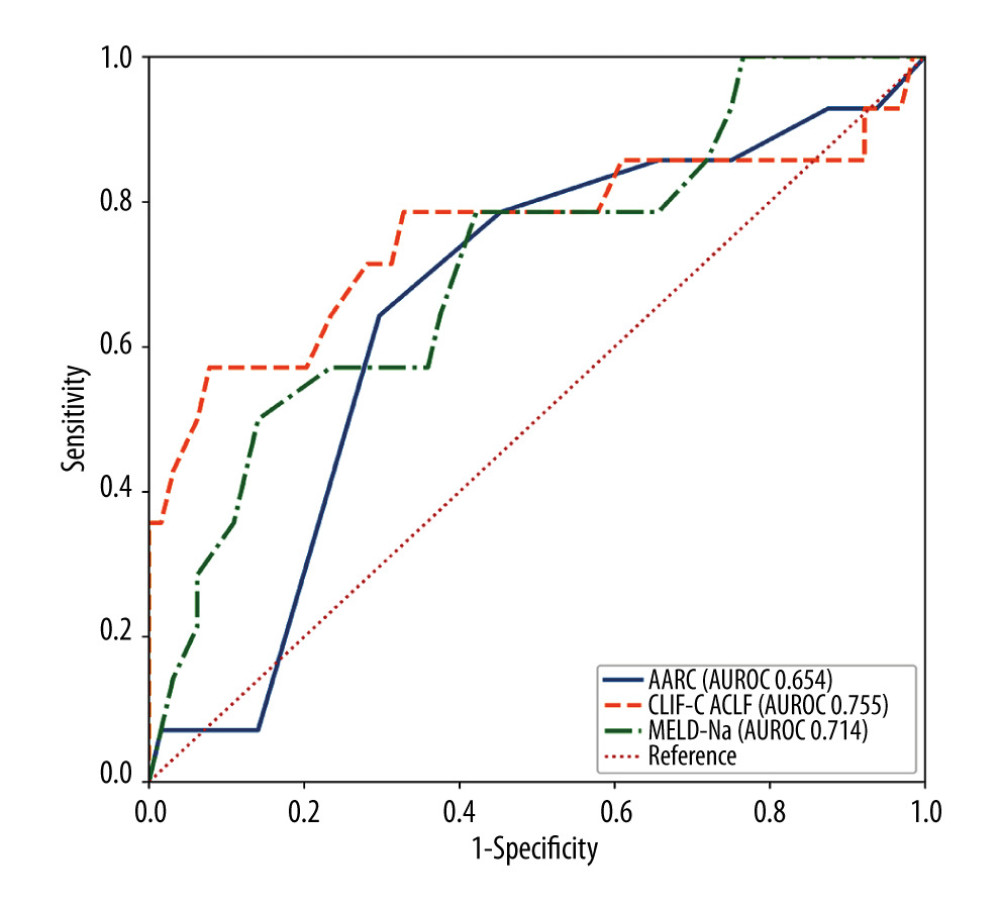
CLIF-C ACLF demonstrated the highest numerical discrimination for 90-day mortality, with an AUROC of 0.755 (bootstrap 95% confidence interval [CI], 0.562–0.917). The AUROC was 0.714 (95% CI, 0.550–0.854) for MELD-Na and 0.654 (95% CI, 0.491–0.799) for AARC (Figure 1, Table 2).
In paired DeLong comparisons, the AUROC difference between CLIF-C ACLF and AARC was 0.101. Although this comparison approached conventional statistical significance before adjustment, it was not significant after correction for multiple testing. No significant difference was identified between CLIF-C ACLF and MELD-Na or between MELD-Na and AARC (Table 3).
ASSOCIATIONS WITH 90-DAY MORTALITY:
In separate Firth penalized logistic regression models, a 1-standard-deviation increase in CLIF-C ACLF, corresponding to 11.05 points, was associated with higher odds of 90-day mortality (odds ratio [OR], 2.72; 95% CI, 1.31–5.64; P = 0.007). A 1-standard-deviation increase in MELD-Na, corresponding to 6.17 points, was also associated with mortality (OR, 2.17; 95% CI, 1.13–4.17; P = 0.019). For AARC, 1 standard deviation corresponded to 2.39 points, and the association was not statistically significant (OR, 1.63; 95% CI, 0.88–3.03; P = 0.121).
Similar results were obtained in time-to-event analyses. The hazard ratio per 1-standard-deviation increase was 2.89 for CLIF-C ACLF (95% CI, 1.47–5.66; P = 0.002), 2.05 for MELD-Na (95% CI, 1.15–3.66; P = 0.016), and 1.63 for AARC (95% CI, 0.93–2.87; P = 0.089). Schoenfeld-residual diagnostics did not indicate a material violation of the proportional-hazards assumption.
SECONDARY AND SENSITIVITY ANALYSES:
For the secondary 30-day outcome, CLIF-C ACLF had an AUROC of 0.740 (95% CI, 0.484–0.952), compared with 0.702 (95% CI, 0.523–0.857) for AARC and 0.688 (95% CI, 0.516–0.838) for MELD-Na. In Firth logistic regression, CLIF-C ACLF was associated with 30-day mortality (OR per 1-standard-deviation increase, 2.48; 95% CI, 1.05–5.86; P = 0.039). The associations for AARC and MELD-Na did not reach statistical significance. Because only 8 deaths occurred within 30 days, these analyses were considered exploratory.
Treating any recorded pretransplant continuous renal replacement therapy episode as satisfying the MELD-Na dialysis criterion produced an AUROC of 0.725 for 90-day mortality, compared with 0.714 under the primary calculation rule. When the originally recorded scores were used (n = 78; 14 deaths), CLIF-C ACLF retained the highest descriptive AUROC. Restriction to living-donor recipients (n = 70; 12 deaths) and the analysis conditioned on survival beyond postoperative day 7 (n = 74; 10 deaths after day 7) did not materially change the qualitative interpretation (Table 4). These sensitivity estimates were treated as descriptive point estimates, and small numerical differences were not interpreted as evidence of stable comparative performance.
Discussion
In this single-center cohort of patients with EASL-CLIF ACLF undergoing LT, 90-day all-cause mortality was 17.9%. Among the 3 pretransplant scores evaluated at a common time point, CLIF-C ACLF showed the highest numerical discrimination, followed by MELD-Na and AARC. CLIF-C ACLF and MELD-Na were also associated with 90-day mortality in both penalized logistic and time-to-event analyses, whereas the association for AARC did not reach statistical significance. However, none of the pairwise differences in AUROC remained significant after adjustment for multiple comparisons. The principal interpretation is therefore not that CLIF-C ACLF was definitively superior, but that it provided the strongest and most consistent prognostic signal in this cohort, with substantial uncertainty caused by the limited number of deaths.
The observed 90-day survival of 82.1% is consistent with contemporary evidence that LT can achieve favorable outcomes in carefully selected patients with ACLF. The European ECLIS study reported favorable post-transplant survival despite marked variation among centers in listing practices [4]. More recently, long-term follow-up of patients transplanted with ACLF grade 3 showed 5- and 10-year survival rates of 72.6% and 56.8%, respectively, without significant differences from matched recipients with lower ACLF grades or without ACLF [6]. A 2025 systematic review and meta-analysis likewise found a survival benefit after LT across ACLF grades, although recipients with more severe ACLF remained at greater risk of early complications and death [21]. These data support the view that ACLF grade alone should not be used as an automatic futility criterion, provided that candidate selection, timing, and perioperative support are appropriate. Across published cohorts, carefully selected ACLF recipients can achieve substantial post-transplant survival, and matched data suggest that even ACLF grade 3 recipients may have longer-term survival comparable with recipients with lower-grade or no ACLF [6]. At the same time, greater ACLF severity remains associated with higher early postoperative risk [21]. Because the present study included only ACLF recipients, these comparisons are contextual and were not directly estimated in our cohort.
In our cohort, mortality increased numerically from ACLF grade 1 to grades 2 and 3, but the separation between grades was incomplete. ACLF grade summarizes the number and pattern of organ failures, whereas post-transplant outcome also depends on age, physiological reserve, systemic inflammation, infection control, reversibility of organ dysfunction, and donor-recipient factors. This may explain why a continuous score incorporating both organ failure and non-organ-failure variables provided more information than grade alone. It also reinforces the need for repeated assessment rather than a decision based on a single severity category obtained earlier in the disease course.
The numerical advantage of CLIF-C ACLF is biologically plausible. The score incorporates the CLIF-C Organ Failure score together with age and white blood cell count, thereby capturing extrahepatic organ dysfunction, systemic inflammation, and reduced physiological reserve. LT replaces the failing native liver and can rapidly correct several liver-dependent abnormalities; however, renal, circulatory, respiratory, neurological, and immune dysfunction may persist into the perioperative period. These residual abnormalities are directly or indirectly represented in CLIF-C ACLF and may therefore remain relevant to early post-transplant survival. Nevertheless, the AUROC of 0.755 represents moderate rather than excellent discrimination, and its wide confidence interval precludes use of the score as a stand-alone acceptance or exclusion tool.
MELD-Na also retained clinically meaningful prognostic value. Its AUROC was 0.714, and higher values were associated with both the odds and hazard of death within 90 days. The result suggests that pretransplant hepatic dysfunction, coagulopathy, renal dysfunction, and hyponatremia remain relevant after LT. However, MELD-Na does not directly account for hepatic encephalopathy, vasopressor dependence, respiratory failure, or systemic inflammation. Its lower numerical performance than CLIF-C ACLF is therefore consistent with the multiorgan nature of EASL-CLIF ACLF. The small difference between the 2 scores and the non-significant paired comparison indicate that MELD-Na remains useful when CLIF-C variables are unavailable or when rapid bedside assessment is required.
AARC showed weaker discrimination and a non-significant association with 90-day mortality. AARC was developed primarily in Asian patients to predict short-term mortality during the natural course or medical management of APASL-defined ACLF. Although it includes lactate and hepatic encephalopathy, it does not explicitly represent circulatory and respiratory failure to the same extent as the CLIF-C framework. Differences in ACLF definition, target population, assessment context, and outcome may therefore limit its transportability to post-transplant mortality in an EASL-CLIF-defined cohort. The findings should not be interpreted as proof that AARC lacks prognostic value; the confidence interval was broad, and a moderate association could have been missed because only 14 primary outcome events occurred.
The HBV-predominant composition of our cohort also makes COSSH-based frameworks relevant contextually. COSSH-ACLF and COSSH-ACLF II were developed for short-term prognostication in HBV-related ACLF and have shown strong discrimination in that setting [11,12]. However, they were not included in the prespecified 3-score comparison and were developed for short-term prognosis in HBV-related ACLF rather than specifically for post-transplant mortality. Their performance for 90-day mortality after LT, including potential incremental value in HBV-predominant cohorts, warrants dedicated external validation.
The predominance of living-donor LT is a clinically important feature of this study. Almost 90% of recipients received living-donor grafts, in contrast to many European and North American cohorts. An urgent living-donor program has recently been shown to extend access to LT for critically ill patients, including some with very high CLIF-C ACLF scores [22]. In an intention-to-treat comparison, a living-donor strategy reduced waitlist death or delisting and shortened time to transplantation, while post-transplant outcomes were comparable with deceased-donor LT [23]. A Vietnamese single-center study also reported the feasibility of adult-to-adult right-lobe living-donor LT for ACLF [24]. Our cohort included only patients who ultimately underwent LT and therefore cannot quantify waitlist benefit. Nonetheless, the favorable early survival supports living donation as a potentially important means of reaching the narrow transplant window in HBV-predominant Asian settings.
Our findings should also be considered in relation to models developed specifically for post-transplant prognosis. The SALT-M score was developed and externally validated to predict 1-year mortality after LT in severe ACLF and achieved moderate discrimination using readily available recipient variables [25]. More recently, the nationwide multicenter HALT study in HBV-related ACLF incorporated age, number of organ failures, lactate, donation after circulatory death, and cold ischemia time. The model outperformed several conventional scores in its external testing cohort, highlighting the importance of combining recipient severity with graft characteristics [26]. These models address a different question from the present study: prediction of absolute post-transplant risk rather than comparison of widely used pretransplant disease-severity scores. Their development also suggests why CLIF-C ACLF, MELD-Na, and AARC alone are unlikely to provide high discrimination after LT. Post-transplant risk is determined jointly by recipient condition, donor and graft quality, operative factors, and perioperative care. The present analysis was designed around 30- and 90-day outcomes and did not evaluate comparative discrimination at 1 year; longer-term validation of these pretransplant scores remains necessary. Future studies may also explore whether machine-learning approaches can integrate multidimensional recipient, donor, graft, operative, and perioperative data beyond established scores; the present cohort is not suitable for developing or validating such models.
The timing of score assessment is another important consideration. ACLF is dynamic, and improvement or deterioration of organ failure before LT is associated with post-transplant survival [27]. In the present study, clinical ACLF grade was assigned during the index ACLF episode, whereas all 3 scores were recalculated using the most recent common pretransplant assessment. This approach ensured a fair head-to-head comparison, but the values may reflect partial response to intensive care rather than peak disease severity. Future studies should compare scores at diagnosis, at maximum severity, and immediately before LT, and assess whether score trajectories or recovery of individual organ failures provide greater prognostic information than a single measurement.
Independent recalculation of the scores was an additional methodological strength. The recalculated values generally provided greater numerical discrimination than the originally recorded values, particularly for MELD-Na. This observation emphasizes the importance of standardizing units, laboratory bounds, assessment timing, rounding, and renal replacement therapy rules. The sensitivity analysis that classified any recorded continuous renal replacement therapy episode as fulfilling the MELD-Na dialysis criterion produced only a small change in the 90-day AUROC, indicating that uncertainty about dialysis duration was unlikely to explain the main findings.
This study has several limitations. First, it was conducted at a single center and included 78 recipients with 14 deaths within 90 days. The study therefore had limited power for paired comparisons, and non-significant differences should not be interpreted as equivalence. Second, the cohort was conditioned on receipt of LT. The results cannot be extrapolated to all patients with ACLF referred for transplantation and do not assess waitlist mortality, transplant benefit, or selection futility. A contemporaneous non-ACLF or acute-decompensation comparator was not included in the study dataset; consequently, the study cannot determine whether post-transplant survival or score performance differs between ACLF and non-ACLF recipients. Third, the predominance of HBV-related disease and living-donor LT may limit generalizability to populations in which alcohol-related or metabolic liver disease and deceased-donor transplantation predominate, although it increases relevance to Asian programs. Fourth, ACLF grade and the 3 scores were not necessarily measured at the same stage of the clinical trajectory. Fifth, cirrhosis was confirmed on explant histopathology in 13 patients whose pretransplant documentation was inconclusive; although all ACLF features and score components were derived from pretransplant data, retrospective confirmation may raise classification concerns. Sixth, the exact duration and timing of continuous renal replacement therapy were incomplete in some patients. Finally, the study did not incorporate frailty, sarcopenia, comorbidity burden, donor quality, graft-to-recipient matching, cold ischemia time, or perioperative complications, which may improve post-transplant prediction.
The study also has important strengths. Ninety-day outcome ascertainment was complete, all 3 scores were independently recalculated at the same pretransplant time point, and correlated AUROCs were compared using paired methods with correction for multiple testing. Penalized logistic regression was used to reduce small-sample bias, and the findings were examined using time-to-event and sensitivity analyses. The cohort also provides data from an HBV-predominant, predominantly living-donor transplant program, a setting that remains underrepresented in much of the EASL-CLIF literature.
Conclusions
CLIF-C ACLF showed the highest numerical discrimination and the strongest association with 90-day mortality after LT, while MELD-Na also retained meaningful prognostic value. AARC performed less strongly in this EASL-CLIF-defined post-transplant cohort. However, direct comparisons did not establish statistically significant superiority of any score. These scores should therefore be used as complementary components of multidisciplinary pretransplant assessment rather than as stand-alone criteria for transplant eligibility. Larger multicenter studies should evaluate dynamic score trajectories and integrate recipient severity with frailty, comorbidities, donor and graft characteristics, and perioperative factors to improve prediction of early post-transplant outcomes.
References
1. Moreau R, Jalan R, Gines P, Acute-on-chronic liver failure is a distinct syndrome that develops in patients with acute decompensation of cirrhosis: Gastroenterology, 2013; 144(7); 1426-37e1
2. European Association for the Study of the Liver, EASL Clinical Practice Guidelines on acute-on-chronic liver failure: J Hepatol, 2023; 79(2); 461-91
3. Karvellas CJ, Bajaj JS, Kamath PS, AASLD Practice Guidance on acute-on-chronic liver failure and the management of critically ill patients with cirrhosis: Hepatology, 2024; 79(6); 1463-502
4. Belli LS, Duvoux C, Artzner T, Liver transplantation for patients with acute-on-chronic liver failure in Europe: Results of the ELITA/EF-CLIF collaborative study (ECLIS): J Hepatol, 2021; 75(3); 610-22
5. Bernal W, Taylor R, Rowe IA, Liver transplantation for critically ill patients with acute on chronic liver failure: A prospective national programme of waitlist prioritisation: Lancet Reg Health Eur, 2024; 46; 101067
6. Artru F, Sacleux SC, Ursic-Bedoya J, Long-term outcome following liver transplantation of patients with ACLF grade 3: J Hepatol, 2025; 82(1); 62-71
7. Kamath PS, Wiesner RH, Malinchoc M, A model to predict survival in patients with end-stage liver disease: Hepatology, 2001; 33(2); 464-70
8. Kim WR, Biggins SW, Kremers WK, Hyponatremia and mortality among patients on the liver-transplant waiting list: N Engl J Med, 2008; 359(10); 1018-26
9. Jalan R, Saliba F, Pavesi M, Development and validation of a prognostic score to predict mortality in patients with acute-on-chronic liver failure: J Hepatol, 2014; 61(5); 1038-47
10. Choudhury A, Jindal A, Maiwall R, Liver failure determines the outcome in patients of acute-on-chronic liver failure: Comparison of APASL ACLF Research Consortium and CLIF-SOFA models: Hepatol Int, 2017; 11(5); 461-71
11. Wu T, Li J, Shao L, Development of diagnostic criteria and a prognostic score for hepatitis B virus-related acute-on-chronic liver failure: Gut, 2018; 67(12); 2181-91
12. Li J, Liang X, You S, Development and validation of a new prognostic score for hepatitis B virus-related acute-on-chronic liver failure: J Hepatol, 2021; 75(5); 1104-15
13. Xia L, Qiao ZY, Zhang ZJ, Transplantation for EASL-CLIF and APASL acute-on-chronic liver failure patients: The TEA cohort to evaluate long-term post-transplant outcomes: EClinicalMedicine, 2022; 49; 101476
14. Kulkarni AV, Reddy R, Sharma M, Healthcare utilization and outcomes of living donor liver transplantation for patients with APASL-defined acute-on-chronic liver failure: Hepatol Int, 2023; 17(5); 1233-40
15. Sacleux SC, Ichai P, Coilly A, Liver transplant selection criteria and outcomes in critically ill patients with ACLF: JHEP Rep, 2024; 6(1); 100929
16. von Elm E, Altman DG, Egger M, The Strengthening the Reporting of Observational Studies in Epidemiology statement: Guidelines for reporting observational studies: Lancet, 2007; 370(9596); 1453-57
17. DeLong ER, DeLong DM, Clarke-Pearson DL, Comparing the areas under 2 or more correlated receiver operating characteristic curves: A nonparametric approach: Biometrics, 1988; 44(3); 837-45
18. Holm S, A simple sequentially rejective multiple test procedure: Scand J Stat, 1979; 6(2); 65-70
19. Firth D, Bias reduction of maximum likelihood estimates: Biometrika, 1993; 80(1); 27-38
20. Harrell FE, Lee KL, Mark DB, Multivariable prognostic models: Issues in developing models, evaluating assumptions and adequacy, and measuring and reducing errors: Stat Med, 1996; 15(4); 361-87
21. Li ZX, Zeng JH, Zhong HL, Peng B, Liver transplantation improves prognosis across all grades of acute-on-chronic liver failure patients: A systematic review and meta-analysis: World J Gastroenterol, 2025; 31(12); 102007
22. Kwon HM, Kim JH, Kim SH, Benefits of liver transplant in critically ill patients with acute-on-chronic liver failure: Implementation of an urgent living-donor program: Am J Transplant, 2025; 25(1); 150-63
23. Wong TCL, Au KKP, Chan MMY, Living donor liver transplantation reduced waitlist mortality in acute-on-chronic liver failure: Ann Surg, 2025; 282(5); 868-75
24. Vu QV, Le TV, Le HT, Adult-to-adult right lobe graft living donor liver transplantation for acute-on-chronic liver failure: A single-center retrospective study in Vietnam: Ann Med Surg (Lond), 2024; 86(3); 1261-67
25. Hernaez R, Karvellas CJ, Liu Y, The novel SALT-M score predicts 1-year post-transplant mortality in patients with severe acute-on-chronic liver failure: J Hepatol, 2023; 79(3); 717-27
26. Zhuang L, Lin Y, Jia Y, Development and validation of a novel prognostic model to predict 1-year post-transplant mortality for acute-on-chronic hepatitis B liver failure: A nationwide, multicentre, cohort study: EClinicalMedicine, 2025; 86; 103365
27. Sundaram V, Kogachi S, Wong RJ, Effect of the clinical course of acute-on-chronic liver failure prior to liver transplantation on post-transplant survival: J Hepatol, 2020; 72(3); 481-88
Tables
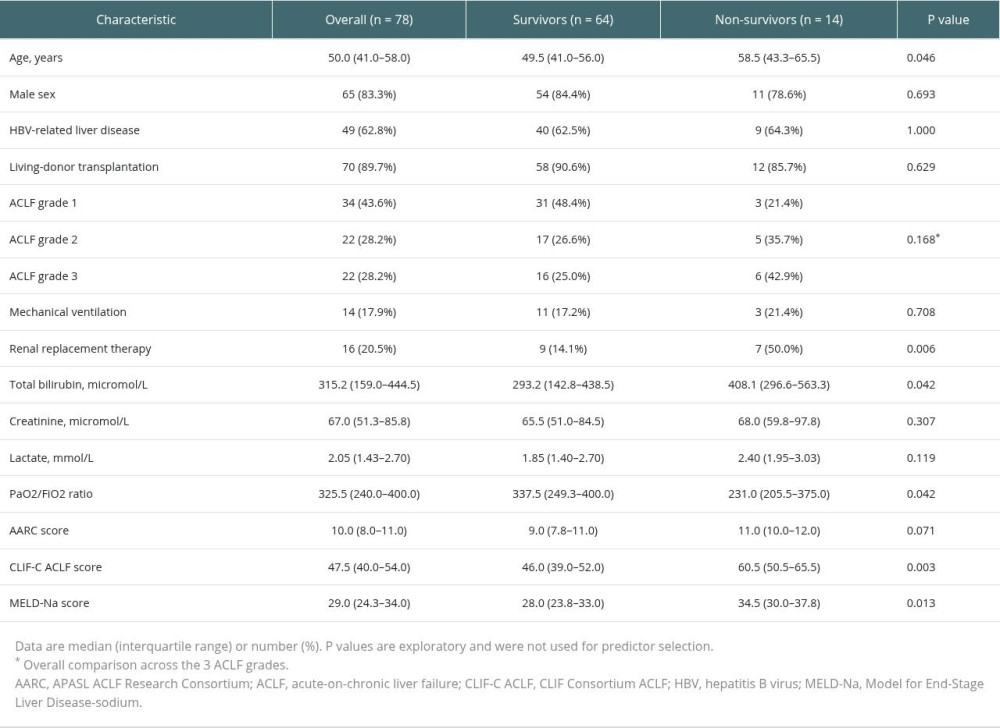 Table 1. Selected characteristics according to 90-day survival status.
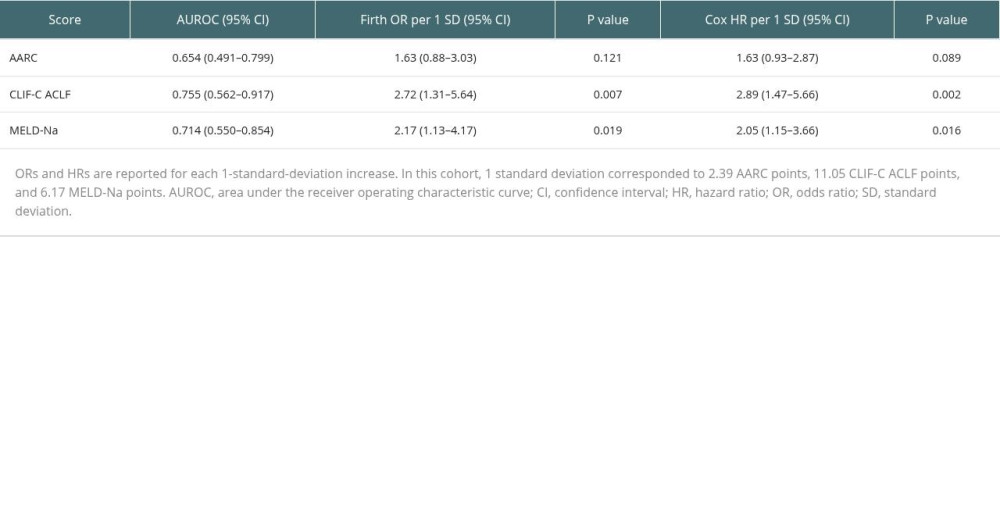 Table 2. Prognostic performance for 90-day mortality.
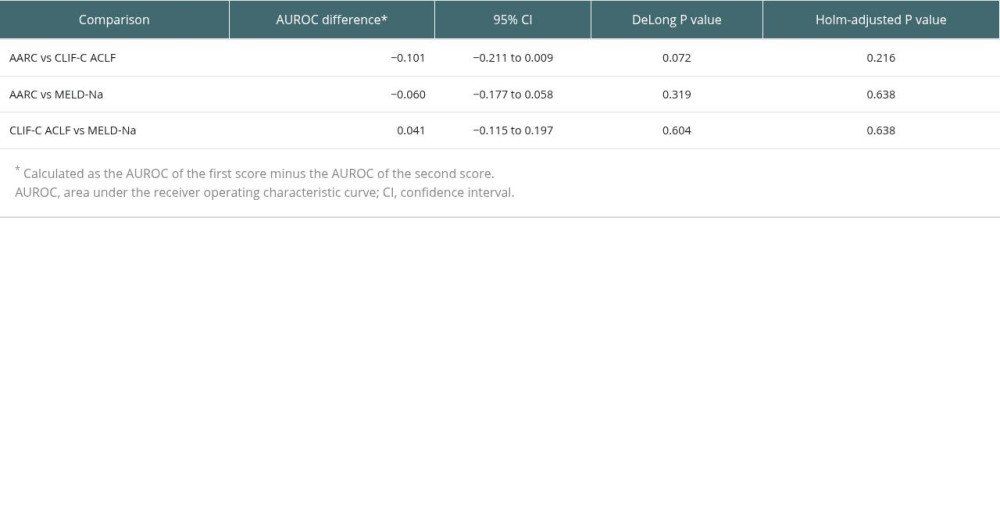 Table 3. Pairwise comparison of AUROCs for 90-day mortality.
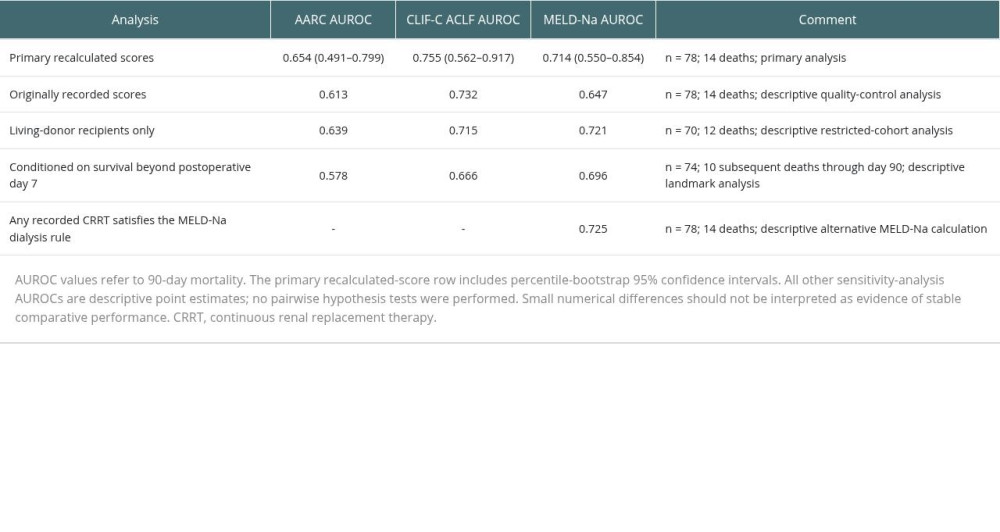 Table 4. Sensitivity analyses for 90-day mortality.Table 1. Selected characteristics according to 90-day survival status.Table 2. Prognostic performance for 90-day mortality.Table 3. Pairwise comparison of AUROCs for 90-day mortality.Table 4. Sensitivity analyses for 90-day mortality.
 In Press
Original article
Fundamental Strategies and Technical Perspectives in Bile Duct Anastomosis for Living Donor Liver Transplan...Ann Transplant In Press; DOI: 10.12659/AOT.953761
Clinical Research
Retrospective Study of Implementation and Outcomes of a Non-Cryopreserved Autologous Hematopoietic Stem Cel...Ann Transplant In Press; DOI: 10.12659/AOT.954230
Clinical Research
Prognostic Prediction in Living Donor Liver Transplantation Recipients With Complete Pathological Response ...Ann Transplant In Press; DOI: 10.12659/AOT.954574
Most Viewed Current Articles
24 Aug 2021 : Review article 21,978
Normothermic Machine Perfusion (NMP) of the Liver – Current Status and Future PerspectivesDOI :10.12659/AOT.931664
Ann Transplant 2021; 26:e931664
29 Dec 2021 : Original article 18,247
Efficacy and Safety of Tacrolimus-Based Maintenance Regimens in De Novo Kidney Transplant Recipients: A Sys...DOI :10.12659/AOT.933588
Ann Transplant 2021; 26:e933588
22 Nov 2022 : Original article 16,856
Long-Term Effects of Everolimus-Facilitated Tacrolimus Reduction in Living-Donor Liver Transplant Recipient...DOI :10.12659/AOT.937988
Ann Transplant 2022; 27:e937988
05 Apr 2022 : Original article 16,762
Impact of Statins on Hepatocellular Carcinoma Recurrence After Living-Donor Liver TransplantationDOI :10.12659/AOT.935604
Ann Transplant 2022; 27:e935604